
Anonymous video chat is popular because it feels simple.
You open a page, start a video chat, and meet someone new without building a long profile, uploading personal photos, or explaining who you are. For many people, that low-pressure feeling is the main reason random video chat is still attractive.
But video is personal.
Unlike text chat, video can reveal your face, voice, room, background, habits, and sometimes even clues about where you are. That is why safety and privacy should never be treated as extra features. They should be part of the experience from the beginning.
This guide explains what anonymous video chat means, what risks to watch for, and how to use privacy-first tools like no sign-up access and face blur to stay more in control when talking to strangers online.
What is anonymous video chat?
Anonymous video chat means talking to another person through live video without attaching your real identity to the conversation.
In most cases, that means:
- No long profile
- No public username
- No social feed
- No follower system
- No need to share your real name
- No expectation to stay connected after the chat ends
The goal is simple: you can talk to someone in the moment without turning that interaction into a permanent online identity.
This is one reason anonymous video chat feels different from social media or dating apps. Those platforms usually ask you to create a profile first. Anonymous chat starts with the conversation instead.
That can be freeing, but it also means you need to think carefully about privacy before you start.
Is anonymous video chat actually safe?
Anonymous video chat can be safer when the platform is designed around privacy and user control.
But no online chat platform can make every interaction perfectly safe.
The real question is not “Is every anonymous video chat safe?” The better question is:
Does this platform give you enough control before, during, and after the conversation?
A safer anonymous video chat experience should let you:
- Start without sharing personal information
- Avoid creating a permanent public profile
- Leave a conversation instantly
- Control what is visible on camera
- Report harmful behavior
- Understand the platform’s rules
- Avoid pressure to reveal more than you want
If a platform pushes you to expose yourself immediately, share personal details, or stay in uncomfortable conversations, that is not privacy-first design.
Why no-sign-up video chat matters
Many people search for video chat no sign up because they want speed. They do not want to create an account just to talk to someone for a few minutes.
But no-sign-up access is not only about convenience.
It can also reduce the amount of personal data attached to the interaction.
When a video chat platform does not require a traditional account, users may avoid sharing:
- Email addresses
- Profile photos
- Real names
- Usernames connected to other platforms
- Social media accounts
- Personal bios
That matters because random video chat is usually about temporary conversations. Not every interaction needs a profile, a history, or a permanent digital trail.
Still, no-sign-up does not automatically mean private. A good no-sign-up video chat experience should also be clear about what is collected, what is not collected, and how users can stay in control.
The biggest privacy risks in random video chat
Random video chat can be fun, spontaneous, and human. But users should be aware of the common risks.
1. Showing your face too early
Your face is one of the most personal things you can reveal online. Once someone sees it, you cannot fully control what they do with that information.
That does not mean you should never show your face. It means you should be able to choose when you feel comfortable.
2. Revealing your environment
Your background can say more than you realize.
A room, window, school logo, street sign, workplace detail, or even a unique object can accidentally reveal personal information.
Before starting a video chat, check what is visible behind you.
3. Sharing personal details too quickly
In a casual conversation, it is easy to reveal too much.
Avoid sharing:
- Your full name
- Your exact location
- Your phone number
- Your workplace
- Your school
- Your social media accounts
- Financial information
- Private photos
A good rule is simple: if you would not want a stranger to save it, do not share it.
4. Feeling pressured to continue
You do not owe anyone your time.
If a conversation feels uncomfortable, strange, aggressive, or manipulative, leave. A safer video chat experience should make exiting easy and instant.
5. Screenshots and recordings
Users should always assume that anything visible on screen could be captured. This is one of the biggest reasons privacy tools matter in live video chat.
A platform cannot control another person’s device completely, but it can help reduce exposure by giving users more visual control.
How face blur helps protect privacy
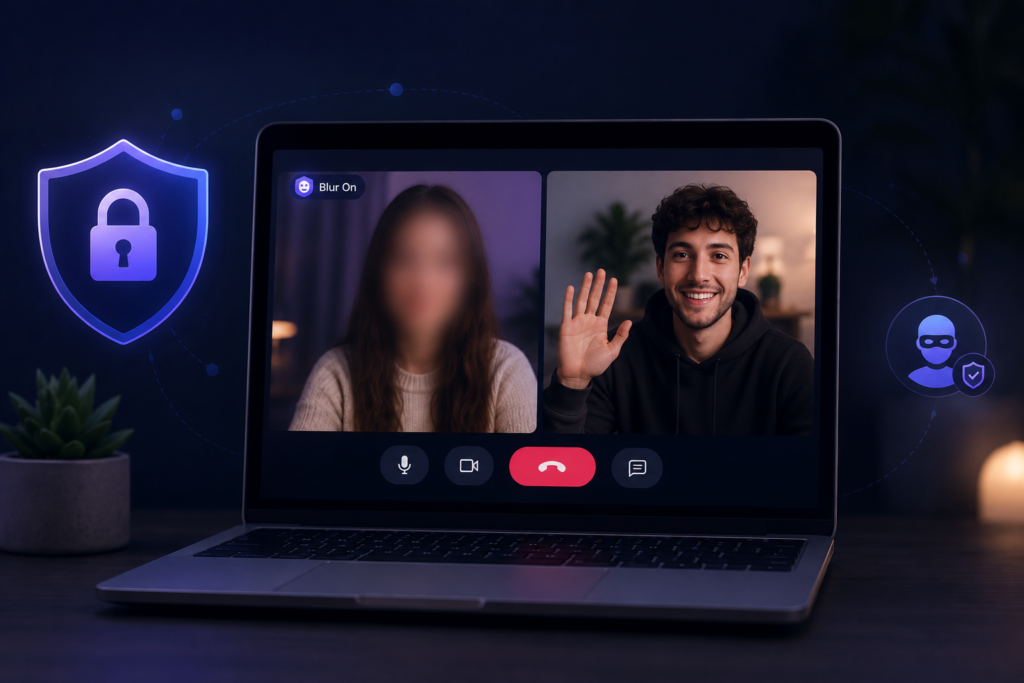
Face blur is a privacy layer that helps users start a video conversation with less exposure.
Instead of showing your full face immediately, blur gives you a buffer. You can talk first, understand the vibe, and decide whether you want to reveal more.
This changes the feeling of random video chat.
Without blur, the interaction often starts with instant exposure. With blur, the interaction can start with conversation, tone, and comfort.
Face blur can help users:
- Reduce unwanted exposure
- Avoid showing their face too early
- Feel more comfortable in the first moments of a chat
- Focus on conversation instead of appearance
- Leave before revealing more
- Keep control over how they are seen
Privacy does not mean hiding forever. It means having a choice.
That choice is especially important when talking to strangers online.
What to look for in a safer anonymous video chat platform
Before using any random video chat platform, look for signs that it takes privacy and safety seriously.
Clear privacy controls
The platform should explain how users can protect themselves. Features like face blur, quick exit, and no public profile can make the experience feel more controlled.
No forced public identity
Anonymous video chat should not require users to build a permanent public profile before starting.
Simple exit
Leaving a chat should be easy. Users should never feel trapped in a conversation.
Clear community rules
A platform should explain what is allowed, what is not allowed, and what happens when users cross boundaries. You can review Bluured’s community rules before starting.
Report or contact flow
If something goes wrong, users should know how to report it or contact the platform. A visible contact page is an important trust signal.
Age clarity
If a platform is designed for adults, that should be clearly stated. Adult-only spaces need clear boundaries.
Privacy-first messaging
Be careful with platforms that only focus on shock value, exposure, or extreme content. A healthier anonymous video chat experience should be built around consent, control, and comfort.
Anonymous video chat vs. traditional social apps
Anonymous video chat and social apps solve different problems.
Social apps usually ask you to create an identity first. You add a name, photo, bio, interests, and sometimes your location. Then you start interacting.
Anonymous video chat works differently.
The conversation comes first.
That makes it useful for people who want:
- Quick interaction
- Less pressure
- No long profile setup
- No public identity
- One-time conversations
- More control over what they reveal
This is why anonymous video chat is not just a lighter version of social media. It is a different type of online interaction.
The best version of it should feel temporary, controlled, and easy to leave.
How Bluured approaches anonymous video chat
Bluured is built around a simple idea: people should be able to meet new people online without feeling forced to reveal everything immediately.
Instead of making the first moment of a video chat feel exposing, Bluured focuses on privacy, control, and a more comfortable start.
With Bluured, users can explore random video chat while keeping privacy in mind. Features like anonymous access and face blur help make the first interaction feel less pressured.
For users looking for an Omegle alternative 18+, the goal is not only to connect with strangers. The goal is to create a more controlled way to start conversations.
For users interested in more specific spaces, Bluured also offers pages such as gay video chat and NSFW chat, while still keeping privacy and user control at the center of the experience.
Tips for safer anonymous video chat
Here are practical habits that can help you stay safer when talking to strangers online.
Start with less information
Do not begin by sharing your name, location, social accounts, or personal story. Let the conversation build slowly.
Use privacy features first
If face blur or reduced visibility is available, use it at the beginning. You can always reveal more later if you feel comfortable.
Check your background
Before starting, make sure your room or background does not reveal private details.
Trust discomfort
If something feels off, leave. You do not need to justify it.
Keep conversations in the platform
Avoid moving immediately to another app or sharing social media accounts with someone you just met.
Do not share sensitive content
Even in private-feeling conversations, assume that anything visible could be saved.
Read the rules and privacy policy
A platform’s safety, privacy, and community pages can tell you a lot about how seriously it treats users. You can also review Bluured’s privacy policy to understand how privacy is handled.
Why privacy-first design matters
Many random video chat platforms focus only on speed.
Fast matching. Fast conversations. Fast exits.
Speed is useful, but it is not enough.
A better experience also gives users control. That means letting people decide how much they reveal, when they reveal it, and whether they want to continue.
Privacy-first design is not about making video chat boring. It is about making it more comfortable.
When users feel safer, they can be more present. They can talk naturally, leave when needed, and avoid the pressure of instant exposure.
That is the kind of anonymous video chat experience more people are looking for now.
Final thoughts
Anonymous video chat can be a simple way to meet new people online, but safety depends on the design of the platform and the choices you make as a user.
Look for experiences that reduce pressure instead of increasing it.
The safest anonymous video chat platforms are not the ones that push you to reveal everything immediately. They are the ones that give you control from the first second.
If you want to talk to strangers online, start with privacy in mind:
- Keep personal details private
- Use no-sign-up options carefully
- Control what appears on camera
- Leave uncomfortable conversations
- Choose platforms that respect boundaries
A good conversation should never require giving up control.
FAQ
Is anonymous video chat completely private?
Not completely. Anonymous video chat can reduce the amount of personal information attached to a conversation, but users should still be careful. Avoid sharing your real name, exact location, social accounts, or other identifying details.
Is no-sign-up video chat safer?
No-sign-up video chat can reduce the need to share account details, but safety also depends on the platform’s privacy controls, rules, moderation, and user behavior.
Why is face blur useful in video chat?
Face blur helps reduce immediate exposure. It lets users start a conversation without showing their full face right away, giving them more control before deciding whether to reveal more.
Can someone record a random video chat?
Users should always assume that anything visible online could potentially be captured. This is why it is important to avoid sharing sensitive information and to use privacy features when available.
What should I avoid sharing in anonymous video chat?
Avoid sharing your full name, address, workplace, school, phone number, social media accounts, financial details, or anything that could identify you.
What should I do if a video chat feels uncomfortable?
Leave immediately. You do not need to explain or continue a conversation that makes you uncomfortable.